 English
 German
 French
 Spanish
 Portuguese
 Italian
 Polish
 Turkish
 Romanian
 Greek
Greek
 Bulgarian
 Russian
 Arabic
 Hindi
Hindi
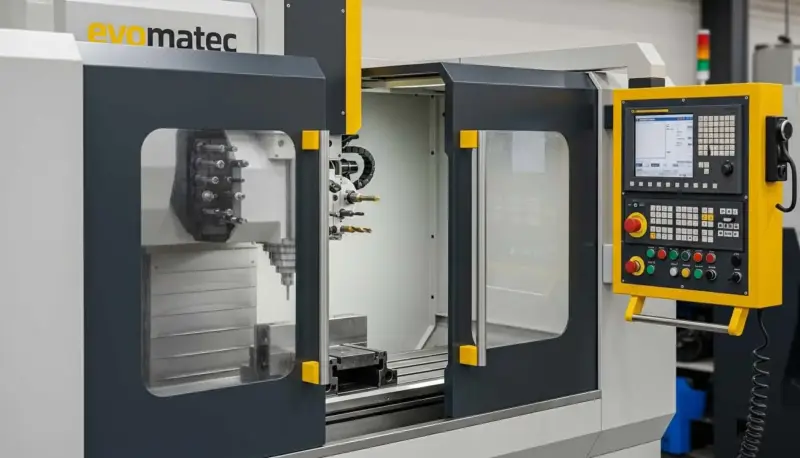
Profile End Milling Machine
Profile End Milling Machine: Precision, Productivity, and Process Reliability in Modern Profile Manufacturing
In advanced profile manufacturing, the quality of a finished window, door, or façade system is not determined by cutting alone. The end condition of the profile—the exact geometry, the flatness of functional surfaces, the cleanliness of edges, and the repeatability of joint preparation—often decides whether downstream assembly runs smoothly or turns into correction work, scrap, and delays. This is why a Profile End Milling Machine is not a “nice-to-have” accessory in a production line. It is a core quality station that transforms a cut profile into a joint-ready component with consistent geometry, clean end surfaces, and reliable reference faces for assembly and welding.
As production environments scale up, end milling becomes even more critical. Tight tolerances, high throughput, and customer expectations for flawless visual finishes leave little room for variability. A stable end milling process reduces rework, supports better sealing and alignment, improves the appearance of finished frames, and protects the productivity of the entire line. When end milling is optimized, it becomes a measurable advantage: fewer rejects, faster assembly, and more predictable outputs across shifts.
This article explains the technology, process logic, and practical decision criteria behind modern end milling solutions for profiles. It also highlights the engineering mindset associated with EVOMATEC as an industrial machine manufacturer—focused on heavy-duty construction, stable process behavior, and scalable manufacturing solutions. You will learn what matters in machine architecture, clamping, automation, tool strategy, surface quality, and integration into modern production systems.
Why End Milling Matters in Profile Processing
End faces are functional surfaces. They define how profiles meet, how joints close, how seals align, and how frames look and behave after assembly. Whether the end preparation is intended for mechanical joining, corner assembly, or welding, the result must be consistent. Any deviation is amplified downstream: a small inaccuracy at the end face can cause misalignment at the corner, uneven sealing pressure, visible gaps, or assembly stress that shortens product life.
End milling is therefore a “quality gate” inside the production workflow. It creates:
- Defined end geometry for repeatable connections
- Flat, clean end surfaces for tight contact and stable joints
- Burr-free edges that protect seals and reduce manual deburring
- Accurate references that speed up assembly and reduce adjustments
- Consistent results across multiple operators and multiple shifts
In professional production, end milling is not treated as a manual correction step. It is implemented as a controlled and measurable process with stable cycle time and predictable outputs.
Materials and Application Reality: Aluminium, Aluminum, PVC, and uPVC
End milling requirements change with the material. Different chips, heat behavior, stiffness, and surface expectations must be considered. In practice, a profile plant often works with mixed materials, mixed profile families, and mixed production goals. A suitable end milling solution must handle these realities without sacrificing reliability.
End Milling in Aluminium and Aluminum Profile Production
Aluminium and aluminum profiles demand rigidity, vibration stability, and effective chip management. End milling operations often require multiple cutters and multiple contact zones. The process must avoid chatter marks, edge burrs, and surface tearing. Robust clamping, stable spindle behavior, and correct tool geometry are essential for consistent results.
A properly configured End Milling Machine for Aluminium Profiles or End Milling Machine for Aluminum Profiles can dramatically reduce the need for manual finishing while improving joint consistency, especially in demanding architectural and industrial applications.
End Milling in PVC and uPVC Profile Production
PVC and uPVC profiles demand clean edge quality and temperature control. While the cutting forces are often lower than aluminium, the material can be sensitive to heat and can show surface marks if clamping is aggressive or if tooling is not optimized. A dedicated End Milling Machine for PVC Profiles or End Milling Machine for uPVC Profiles must balance fast clamping with surface protection and must deliver clean, uniform end surfaces that support sealing and joining processes.
Defining Quality: What “Good End Milling” Looks Like in Practice
Quality is measurable. A professional end milling process is defined by repeatable results and predictable process behavior. The most common quality indicators include:
- End face flatness and surface finish consistency
- Squareness and alignment relative to defined references
- Clean edges and Burr-Free End Milling on visible surfaces and sealing zones
- Dimensional repeatability across high volume production
- Stable cycle time supporting High Productivity End Milling
- Minimal operator dependency
High-value end milling also supports faster assembly. When end faces are consistent, joints close naturally without forcing. This reduces stress in the frame, improves the appearance, and saves time during corner operations and fitting.
Machine Architecture: The Real Foundation of Repeatability
The strength of end milling performance is defined by the machine’s mechanical design. End milling is a heavy-contact operation, especially in aluminium profiles, where tool engagement can be significant. A rigid base, stable spindle support, and a vibration-resistant structure reduce chatter, improve surface finish, and protect tools.
Industrial manufacturers such as EVOMATEC emphasize heavy-duty architecture because it protects process stability over time. In real production, a machine must deliver the same quality on day 700 as it did on day 7. That requires an engineering approach built around durability, serviceability, and robust functional design.
Clamping Technology as a Quality Lever
Clamping is not simply holding. It defines reference, repeatability, and stability. The best tooling and the best spindle cannot compensate for a profile that shifts, twists, or vibrates during milling. This is why clamping concepts are often the difference between average results and professional results.
Depending on production requirements, clamping may be:
- A Pneumatic Clamp End Milling Machine approach for fast cycles and efficient operation
- A Hydraulic Clamp End Milling Machine approach for maximum holding force and stability in heavy operations
Clamping must also protect surfaces and avoid deformation. This becomes especially important in uPVC applications where cosmetic surface marks can lead to customer complaints.
Automation Levels: Manual, Semi-Automatic, and Fully Automatic End Milling
Factories and workshops do not share the same needs. The best end milling solution is the one that matches production reality—profile variety, shift structure, volume, and tolerance expectations. End milling machines therefore exist across a wide automation spectrum.
Manual End Milling for Flexibility
A Manual End Milling Machine can be valuable in low volume production, special profiles, or environments where changeovers are constant. It allows skilled operators to adapt quickly. However, manual operation typically introduces variability and is difficult to scale in high volume production.
Semi-Automatic Solutions for Balanced Production
A Semi-Automatic End Milling Machine is often a strong compromise: key sequences such as clamping, tool engagement, and controlled feed can be automated, while loading and some adjustments remain operator-driven. This approach improves repeatability without requiring full-line automation investment.
Automatic End Milling for Consistency and Throughput
An Automatic End Milling Machine aims for stable outputs, minimal operator influence, and consistent cycle time. This enables higher output stability and supports integration into synchronized lines. Automatic solutions often include recipe management, digital settings, and process monitoring concepts that match industrial production expectations.
CNC, NC, PLC, and Servo Control: What These Terms Really Mean
Many buyers see control terms in brochures and assume they all deliver the same value. In reality, the control architecture defines how accurately, how consistently, and how efficiently a machine can operate.
CNC and NC in End Milling
A CNC End Milling Machine typically means programmable positions, repeatable recipes, and the ability to store and reproduce setups. A NC End Milling Machine can describe numerically controlled positioning—often focused on repeatability and standardized setups. Both can be highly effective when paired with rigid mechanics and strong clamping.
PLC-Based Process Control
A PLC-Controlled End Milling Machine emphasizes safe, reliable process sequences. PLC control is widely used for stable automation, especially where the milling path is fixed but the sequence must be consistent and secure.
Servo Control and Precision
A Servo-Controlled End Milling Machine supports precise, dynamic movement and repeatable positioning under load. In modern production, servo control contributes significantly to stable cycle time, controlled feeds, and improved quality consistency, especially when multiple profile families are processed.
Single-Head, Double-Head, and Multi-Head Concepts
Head configuration is one of the most visible differentiators in end milling machines. It directly affects cycle time, flexibility, and capability to handle complex end geometries.
Single-Head End Milling Machine
A Single-Head End Milling Machine is often used for dedicated operations and standard profile families. It can be a robust, efficient solution when the process steps are consistent and the workload is stable.
Double-Head End Milling Machine
A Double-Head End Milling Machine may support faster processing and can be configured to perform complementary operations in one cycle, depending on design. This can improve throughput and reduce handling time.
Multi-Head End Milling Machine
A Multi-Head End Milling Machine is ideal for complex joint preparation, multiple contact zones, and high output environments where cycle time and process consolidation matter. Multi-head concepts often support higher productivity and can reduce the need for secondary operations.
End Face Milling, End Surface Milling, and Profile Joint Preparation
In technical language, you may see both End Face Milling Machine and End Surface Milling Machine. The difference is often semantic: both refer to shaping and finishing the end region of a component. In profile manufacturing, the intention is usually joint preparation.
This includes:
- Profile End Face Milling Machine tasks for joint closure accuracy
- Profile End Surface Milling Machine tasks for sealing and visual finish
- Profile Joint Preparation Machine workflows where end geometry supports corner joints and structural connections
In real production, end milling may also be directly connected to welding workflows, especially in PVC/uPVC window production where joint quality depends on precise and clean preparation.
Welding Preparation and Corner Joint Milling
Welding Preparation End Milling describes end milling strategies that optimize the welding zone and improve corner closure quality. Corner Joint Preparation Milling often focuses on creating defined contact geometry, reducing gaps, and improving the final appearance of assembled frames.
Applications in Window and Door Production
In window and door manufacturing, end milling is a standard-quality operation. Profile ends must be consistent because they affect corner assemblies, gasket behavior, reinforcement alignment, and final appearance. A dedicated End Milling Machine for Window Profiles or End Milling Machine for Door Profiles is therefore designed around repeatable reference points, stable clamping, and reliable cycle time.
Many factories choose a Window and Door Fabrication End Milling Machine as a production standard to ensure that every profile entering the joining stage is joint-ready. This supports stable assembly throughput and reduces correction work at later stations.
Stations, Units, and Centers: How End Milling Fits into a Production Line
Depending on the factory layout, end milling can be configured as a dedicated workstation or integrated as a line station. The following terms are commonly used to describe layout and integration strategy:
- Profile End Milling Unit as a functional module inside a cell
- Profile End Milling Station as a defined production station with standardized inputs and outputs
- Profile End Milling Workstation emphasizing operator ergonomics and efficient handling
- Profile End Milling Center or End Milling Center describing a more centralized, often more automated solution with higher capability and stability
In profile processing environments, the end milling station often acts as a bridge between cutting and joining. If it is weak, it becomes a bottleneck. If it is stable, it increases total line efficiency and improves product quality at scale.
Joint Types: Mullion, Transom, T-Joint, and Cross Joint End Milling
Profile systems in façade, window, and door construction frequently require different joint geometries. End milling machines are therefore often described by the joint type they support:
- A Mullion End Milling Machine for vertical elements and mullion preparation
- A Transom End Milling Machine for horizontal transoms and cross elements
- A T-Joint End Milling Machine to prepare T-connections in profile systems
- A Cross Joint End Milling Machine to prepare intersecting joints with strict contact geometry requirements
These joint categories are not marketing language. They reflect real process requirements: geometry consistency, surface finish, and accurate reference alignment to ensure that structural and sealing performance is correct after assembly.
Process Strategy: Accuracy, Burr Control, and Cycle Time Stability
End milling performance depends on a controlled strategy. The goal is not only material removal but predictable results. Key priorities are:
- Accurate End Milling through stable referencing and controlled feed behavior
- Precision End Milling via rigid mechanics, correct tooling, and repeatable setups
- Burr-Free End Milling through optimized cutters, correct engagement, and stable clamping
- High Productivity End Milling by reducing non-cutting time and improving process flow
Even the best machine will underperform if process discipline is missing. That is why modern factories invest in digital settings, structured recipes, and standardized tool management.
Digital Settings and Tool Change Concepts
A Digital Setting End Milling Machine supports repeatable setups, reduced changeover error, and faster operator training. In many environments, digital settings are the difference between “good on one shift” and “good every day.”
A Quick Tool Change End Milling Machine reduces downtime and increases operational stability, especially in mixed production where tools must be changed frequently to match profile families or joint requirements.
EVOMATEC Manufacturing Mindset: Heavy-Duty Engineering for Real Production
In real production, machines are judged by what they deliver after months and years of continuous operation. This is where the EVOMATEC engineering approach becomes relevant: robust mechanics, stable clamping, durable spindle environments, and service-friendly construction designed for long-term reliability. In industrial profile processing, heavy-duty design is not a luxury. It is a requirement for predictable quality, stable cycle time, and controlled maintenance costs.
When end milling is treated as a key quality station, the machine must behave like a production asset: consistent, repeatable, and scalable. EVOMATEC-type industrial philosophy focuses on building machines that protect the customer’s output stability and reduce hidden production losses caused by variability.
Buying Criteria: Choosing the Right End Milling Solution
A purchase decision should be based on production reality, not brochure claims. The most important evaluation criteria include:
- Profile families and frequency of changeover
- Required tolerance and surface finish standards
- Clamping concept: pneumatic speed versus hydraulic holding power
- Head configuration: single-head, double-head, or multi-head based on cycle time needs
- Control and automation needs: manual, semi-automatic, or fully automatic workflows
- Digital setting and recipe management for repeatability
- Maintenance access, spare part strategy, and long-term serviceability
A factory that expects growth should also plan for integration. An end milling station that can later become part of a synchronized line is a strategic advantage. It prevents the common bottleneck scenario where cutting speed increases but joining and end preparation cannot keep up.
End Milling as a Competitive Advantage in Profile Manufacturing
A modern Profile End Milling Machine is a quality and productivity multiplier. It transforms cut profiles into joint-ready components with controlled geometry, clean end surfaces, and reliable references for assembly and welding. It protects downstream processes, reduces manual correction, improves final product appearance, and stabilizes the entire manufacturing workflow.
Whether the requirement is flexibility, high throughput, or consistent premium quality, the right end milling concept must be matched to the production environment. With industrial engineering principles—heavy-duty structure, reliable control logic, and practical operator workflow—end milling becomes a stable process that supports scale, growth, and long-term manufacturing success.