 English
 German
 French
 Spanish
 Portuguese
 Italian
 Polish
 Turkish
 Romanian
 Greek
Greek
 Bulgarian
 Russian
 Arabic
 Hindi
Hindi
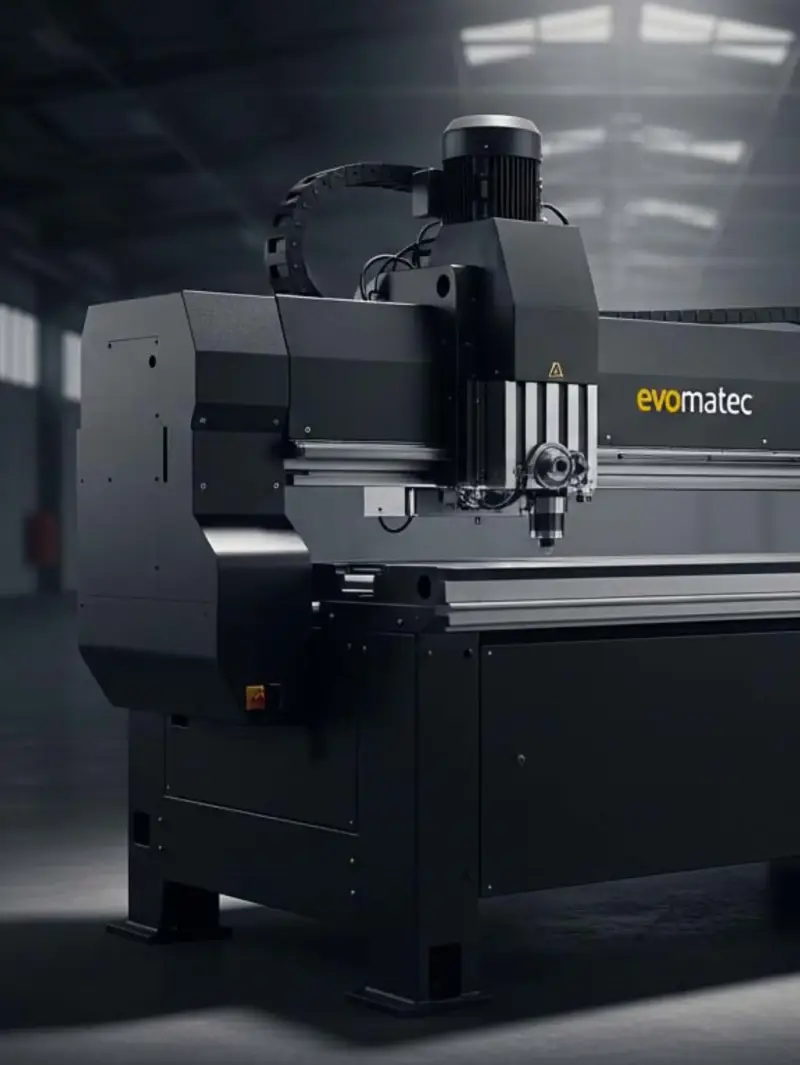
Copy Routing Machine for Profiles
Copy Router for Profiles: Precision Profile Machining for Aluminium, PVC, and Plastics in Window Construction, Door Construction, and Facade Construction
Modern profile machining is the heart of every professional window, door, and facade production. Anyone who manufactures aluminium windows, aluminium doors, PVC windows, PVC doors, or sophisticated facade profiles knows: the quality of the final product is not decided during assembly, but already at the moment of machining on the profile. This is exactly where the copy router for profiles shows its strengths. It stands for reproducible accuracy, clean surfaces, stable tolerances, and a way of working that has proven itself in everyday industrial operation.
A copy router for profiles is far more than a classic milling unit. It is a standardizable machining system that reduces manual susceptibility to errors while providing a high degree of flexibility for different profile geometries. Whether as a profile copy router in the workshop, as a copy routing machine for profiles in a company with serial production, or as an automatic copy router in a modernized production flow: the principle remains attractive because it creates a reliable link between usability, precision, and cost-effectiveness.
In this technical article, the most important aspects of the copy router for profiles are explained comprehensively: application areas, technical fundamentals, process quality, tooling and clamping technology, integration into production, selection criteria, and typical applications for aluminium profiles, PVC profiles, and plastic profiles. In addition, it shows why a copy routing system plays a key in many companies and how an aluminium profile milling machine can optimally complement it in practice. The goal is a premium-optimized guide for Google and, at the same time, real added value for decision-makers, production managers, and workshop managers.
Why the copy router for profiles is so important in profile machining
Profile machining determines fit, function, and appearance. In window and door construction, fittings, locks, hinges, strike plates, drainage points, and mounting points must be set with high precision. Even minor deviations can lead to difficult assembly, poor sealing, increased wear, or complaints. A copy router for profile machining is designed to mill defined contours repeatedly, without having to mark or manually position every machining operation again.
The major strength lies in the reproducible process. While quality in purely handheld solutions depends heavily on the operator, a profile copy router enables significantly more stable results. Especially with changing shifts, high throughput, or multiple machine locations, this process stability is a decisive competitive advantage.
A copy routing machine for profiles is often used where different profile series are processed, but the investment in a fully automatic CNC machining center is not economically viable on every line. In an industrial environment, however, a copy routing system can also be used as a supplement to CNC systems, for example for special operations, rework, prototypes, or short-notice custom orders.
What is a profile copy router and how does it work
A profile copy router is based on a copying principle: a defined contour is traced mechanically via a template, a stop, or a guide system. The milling spindle transfers this movement to the workpiece so that the desired shape is milled into the profile. In practice, this means: once defined contours can be produced in a short time and with high repeat accuracy.
Core components of a copy router for profiles
A professional copy router for profiles typically consists of several system areas:
Rigid machine frame with high stiffness
Clamping and locking technology for secure profile fixing
Milling unit with spindle, motor, and tool holder
Copying mechanism with guides, template holder, or probing system
Stop and positioning systems for length reference and repeat parts
Safety equipment such as hoods, protective screens, and emergency stop
Optional: pneumatics for clamping, feed support, multiple clamping
Depending on the design, a copy router for aluminium profiles can be engineered particularly robustly to cleanly absorb the forces generated during aluminium milling. For PVC profiles and plastic profiles, other parameters are often more important, such as clean cut edges without melting, low burr formation, and adapted tool geometries.
Difference between a manual copy router, an automatic copy router, and a copy routing system
The market offers different levels of automation:
A classic profile copy router is operated manually. The operator clamps the profile, positions it, performs the copying movement, and removes the part.
An automatic copy router increases the degree of automation, for example through automatic clamping cycles, pneumatically assisted movements, automatic positioning on defined stops, or multiple machining operations in one cycle.
A copy routing system is often a solution with multiple stations, possibly with roller conveyors, stops, multiple milling units, or integration into a production flow.
In practice, the boundary is fluid. The decisive factor is how strongly the process is standardized and which parts of the machining are carried out automatically or semi-automatically.
Application areas: copy router for window profiles, door profiles, and facade profiles
The typical application fields of a copy router for profiles are wherever profiles must be contoured, slotted, or milled before fittings are installed or profiles are joined. Especially in window and door construction, machining operations are often recurring, but contours and dimensions vary depending on the system provider.
Copy router for window profiles: precision for fittings, drainage, and mounting
For window profiles, these machining operations are often central:
Drainage and ventilation openings
Strike plate and hinge receivers
Handle and lock contours
Mounting holes and connection points
Milling for sealing and additional profiles, depending on the system
A copy router for window profiles can work very efficiently here because many contours are standardized and can be implemented reproducibly via templates or guides. Especially in companies that manufacture several series in parallel, the copy routing machine for profiles offers a flexible solution to switch quickly between variants.
Copy router for door profiles: power, stability, and clean contours
Door profiles are often larger, more solid, and more heavily loaded in operation. In aluminium doors, multi-point locks, heavy hinges, and robust locking systems are often used. A copy router for door profiles must therefore:
provide stable clamping force,
ensure precise positioning,
mill cleanly without vibration,
and often allow greater milling depths or longer contours.
In this area, a copy router for aluminium doors is particularly in demand, because aluminium can produce burrs, chatter marks, or uneven surfaces if the wrong tooling is used. A high-quality copy routing system can create process reliability here.
Copy router for facade profiles: repeat accuracy on long profiles
In facade construction, profiles are often long and complex. Machining relates to connection zones, fastening areas, notches, slots, and the accommodation of brackets and consoles. The challenge is to clamp long profiles securely and keep positioning stable over the full length.
A copy router for facade profiles is therefore often equipped with:
long support tables,
roller supports,
additional clamping points,
and precise stops
equipped. The copy routing machine for profiles is particularly valued in facade applications when it comes to serial machining of recurring connection details.
Material focus: copy router for aluminium profiles, PVC profiles, and plastic profiles
Material properties determine the machining strategy. A copy router for profiles is only truly productive when tooling, speed, feed, clamping technology, and process parameters match the material.
Copy router for aluminium profiles: stability, chip removal, and surface quality
Aluminium profiles are extremely common in window and facade construction. Milling creates chips that must be removed reliably to prevent surface defects and to protect tools. Typical requirements include:
a rigid machine body against vibration
high spindle power and stable bearing support
suitable tool geometry for aluminium
good chip removal, ideally with extraction
precise stops to avoid positioning errors
A copy router for aluminium profiles can be the central solution in many companies to manufacture standard contours economically. Especially when profiles are anodized or powder-coated, surface quality becomes even more important. Chatter marks or burrs are not only visually problematic, but can also damage seals or hinder assembly.
Copy router for PVC profiles: clean edges without melting
PVC profiles behave differently from aluminium. Heat build-up can lead to melting, smearing, or unclean edges. Therefore, the following points are decisive:
tool geometry suitable for plastics
speed and feed parameters that minimize heat
stable clamping without deforming the profile
clean chip or swarf removal
A copy router for PVC windows and a copy router for PVC doors must work reliably and with repeat accuracy, because PVC elements are often produced in high quantities. A profile copy router is especially attractive here because, in many cases, it can be set up faster than more complex CNC solutions, particularly for standard machining operations.
Copy router for plastic profiles: broad spectrum, adapted process control
Plastic profiles can have very different material blends and hardness levels. The range extends from soft plastics to fiber-reinforced materials. Accordingly, the load on tools and machine varies. A copy router for plastic profiles must therefore be flexibly adjustable and ideally offer several clamping and tooling options.
Process quality: repeat accuracy, tolerances, and assembly capability
In profile machining, it is not only absolute dimensional accuracy that counts, but above all the assembly capability within the system. A contour may be correct on paper, but if it fluctuates in serial production, problems arise during assembly and in the final product. A copy router for profiles aims at stable reproducibility.
Important quality factors include:
secure referencing: clearly defined stops and reference edges
constant clamping force: no movement of the profile under load
stable guidance: no play forming in the copying mechanism
tool condition: sharp tools for clean edges
process parameters: speed and feed matched to the material
An automatic copy router can stabilize quality further because it reduces operator influence, standardizes clamping cycles, and ensures uniform movements.
Tooling technology and milling strategies for the copy routing machine for profiles
The performance of a copy routing machine for profiles depends heavily on the tool. Particularly for aluminium profiles, high-quality cutters are essential.
Tools for aluminium: sharp cutting edges, suitable coating
For aluminium, the following are often used:
carbide cutters with a polished cutting edge,
suitable rake angles,
and, depending on the application, special coatings
are used. The goal is clean chip breaking and a smooth surface. For anodized or coated profiles, burr-free edges and edge quality are particularly important.
Tools for PVC profiles and plastic profiles: reduce heat, protect the edge
For PVC profiles and plastic profiles, other criteria are in the foreground:
less heat build-up,
clean cut edges,
minimized tearing,
stable machining without smearing.
Special plastic cutters with adapted geometry are often used here.
Milling strategies: fitting contours and process reliability
A profile copy router usually works with predefined contours. For process reliability, clear standards are important:
design contours so the cutter has sufficient clearance
plan transitions so that no chatter marks occur
machine in sensible step-downs instead of one aggressive cut
align workpiece supports so the profile does not flex
Clamping technology and positioning: the key to serial quality
One of the most common errors in profile machining is unstable clamping. If the profile moves, the best milling unit is worthless. A copy router for profiles should therefore have professional clamping systems.
Pneumatic clamping and multiple clamps
Many machines use pneumatics to generate uniform clamping force. This provides:
consistent quality
faster setup
fewer operator errors
higher throughput
In a copy routing system, multiple clamps can secure several profiles or several machining areas at the same time.
Stops, length reference, and repeat parts
A good copy routing machine for profiles has precise stop systems. This allows the profile to be positioned quickly and repeatably, which makes the difference especially in serial production.
Production organization: where the copy routing system brings the most benefit in manufacturing
In many companies, the copy router for profiles is used as a central process step between cutting and assembly. The typical sequence:
Cutting the profile to length
Profile machining with a profile copy router or an automatic copy router
Drilling and additional operations, depending on the line
Assembly of fittings, seals, and connecting parts
Assembly of the frame or sash
Final inspection and packaging
A copy routing system can significantly accelerate process flow if it is positioned so that material handling is minimized. Roller conveyors, support tables, and clearly defined work zones increase productivity.
Selection criteria: which copy router for profiles fits the business
The right machine depends on material, quantities, profile sizes, and the application profile. Important questions include:
Which materials dominate: aluminium profiles, PVC profiles, or plastic profiles
Which profile sizes and wall thicknesses are processed
Which contours are standard, which are special cases
How high is the throughput per shift
Should the solution be manual, semi-automatic, or implemented as an automatic copy router
Is a later expansion to a copy routing system planned
If aluminium is the focus
For businesses focused on aluminium windows and aluminium doors, a copy router for aluminium windows and a copy router for aluminium doors are particularly relevant. Here, stiffness, spindle power, clamping technology, and surface quality are decisive. In addition, an aluminium profile milling machine can be an interesting complementary solution when other operations such as end milling, notching, or special pockets are required.
If PVC is the focus
For PVC windows and PVC doors, speed, repeat accuracy, and clean edges are key. A copy router for PVC windows and a copy router for PVC doors must work reliably and with low maintenance. Tooling costs and process stability under changing temperature conditions also play a.
If multiple materials run in parallel
Many businesses produce in hybrid mode: aluminium and PVC, or aluminium and plastic profiles. In these cases, flexibility is decisive. A copy router for profiles should be quick to change over, allow different clamping jaws, and offer variable parameters for speed and feed.
Profile milling machine and aluminium profile milling machine: differentiation and complement to the copy router
The term profile milling machine is often used as an umbrella term. A copy router for profiles is also a profile milling machine at its core, but with a copying principle. An aluminium profile milling machine can also include other concepts, for example:
end milling
notching milling
face milling
special machining units
In many productions, these machines are not competitors, but complements. While the copy router for profiles efficiently maps contour-based milling operations and pockets, an aluminium profile milling machine often covers special end machining or system-related face operations.
Cost-effectiveness: why a copy routing machine for profiles pays off
Investments in machines are evaluated in an industrial environment in terms of productivity, quality, and process reliability. A copy routing machine for profiles can pay off particularly quickly because it:
reduces manual errors and minimizes scrap
reduces machining time per profile
shortens setup time for recurring contours
stabilizes quality and reduces complaints
enables a flexible response to serial and custom orders
An automatic copy router increases these effects further through standardization of clamping and machining cycles.
Maintenance and process stability: how the copy router for profiles stays precise over the long term
Long-term accuracy is not luck, but the result of structured care:
regular inspection and cleaning of the guides
maintenance of the clamping technology and pneumatics
tool management: change, regrind, or replace in time
checking stops and references
extraction and chip handling for a clean machine environment
Especially for aluminium profiles, chip management is crucial. Chips that enter stop surfaces or clamping zones can cause positioning errors.
Future readiness: the of the aluminium copy routing system in an Industry 4.0 environment
Even as CNC machining centers and digital production control increase in many companies, the copy router for profiles remains a highly relevant tool. The reason is simple: many machining operations are standardized, repeatable, and above all must be produced quickly and reliably. A copy routing system can work excellently in an Industry 4.0 environment if it:
uses clear work instructions and setup standards
documents process data where meaningful
works with standardized templates or fixtures
is integrated into an optimized material flow
In practice, it is often not only the machines, but the combination of organization, standardization, and qualification that drives modern profile production forward.
Aluminium copy router for profiles as a driver of quality and productivity
A copy router for profiles is a proven and at the same time highly current solution for modern profile machining. Whether a profile copy router in the workshop or an automatic copy router in a serial line: the advantages lie in repeat-accurate contour generation, stable quality, high usability, and an economical production logic. For aluminium profiles, PVC profiles, and plastic profiles, the copying principle provides a robust basis for reliably machining window profiles, door profiles, and facade profiles.
Anyone who wants to improve process reliability, quality, and productivity in production will find a very efficient solution in a copy routing machine for profiles and in a well-planned copy routing system. In addition, a profile milling machine or an aluminium profile milling machine can cover further machining tasks and thus create a powerful machine concept for window, door, and facade construction.