 English
 German
 French
 Spanish
 Portuguese
 Italian
 Polish
 Turkish
 Romanian
 Greek
Greek
 Bulgarian
 Russian
 Arabic
 Hindi
Hindi
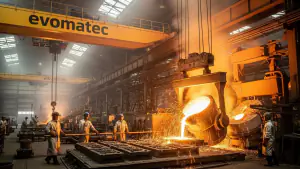
GRAY IRON FOUNDRY
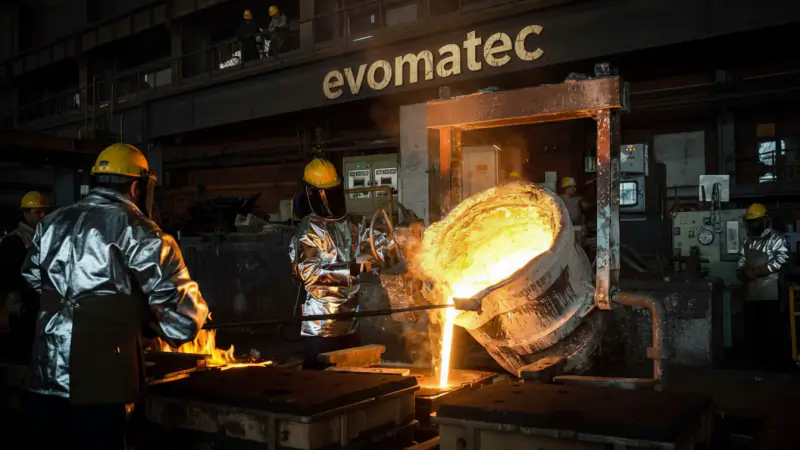
Grey Cast Iron Foundry: Technology, Processes, Applications, Quality, Costs and the Future of Grey Iron Production
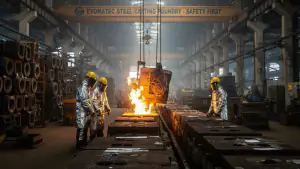
A grey cast iron foundry is a key partner when robust, economical and process-reliable castings with very good damping properties, high compressive strength and good machinability are required. Grey cast iron is one of the most important materials in mechanical and plant engineering, in the automotive industry, in pump and gearbox manufacturing and in many areas of energy and infrastructure technology. The success of grey iron components does not result from casting alone, but from a controlled process chain consisting of material selection, melt practice, moulding and core technology, solidification control, finishing, machining and documented inspection.
Understanding a Grey Cast Iron Foundry: Definition, Material Principle and Differentiation
Grey cast iron is cast iron with lamellar graphite. The carbon in the microstructure is predominantly present as graphite in lamellar form. These graphite lamellae decisively influence the properties: grey cast iron damps vibrations very well, has high compressive strength, can often be machined extremely well and has good sliding and emergency running properties. At the same time, compared to steel casting or ductile iron, grey cast iron has lower tensile strength and significantly lower elongation, which can make it more sensitive to impact or strongly fluctuating tensile loads.
A grey cast iron foundry specializes in setting these material properties reproducibly. This is achieved through chemical composition, melting and inoculation practice, mould material system, cooling conditions and, where applicable, heat treatment. In practice, grey cast iron is therefore not only a material, but a controlled process that combines microstructure, graphite morphology, hardness distribution and dimensional accuracy.
Grey Cast Iron Compared to Ductile Iron and Steel Casting
Ductile iron (cast iron with spheroidal graphite) offers higher toughness and better tensile strength, but is generally less vibration-damping than grey cast iron and can have different machining and cost profiles depending on the design. Steel casting can achieve very high toughness and strength, but is more demanding in terms of process control and is often more costly. Grey cast iron is often the most economical solution when damping, dimensional stability, good machinability and compressive strength are the main priorities.
Typical Standards and Material Designations in Grey Cast Iron
Grey cast iron is often designated via GJL classes, which are differentiated by minimum tensile strengths. In industrial practice, requirements for hardness, microstructure, graphite distribution, machining condition and surface are also specified, because these parameters often influence the later function more strongly than a pure strength value.
Historical Development: Why Grey Cast Iron Remains an Industrial Key Material
Grey cast iron is one of the most traditional metallic materials in industrial manufacturing. Its widespread use emerged from a clear advantage: grey cast iron can be cast very well, is economical to produce in large geometries and enables components with high shape fidelity. With advances in furnace technology, analysis, temperature measurement, inoculation practice and mould material systems, process control improved significantly. This allowed grey iron components to be used in modern machines and plants with tight tolerances, stable quality and documented inspection.
With the growing importance of vibration damping, noise comfort and precision in machines, gearboxes and pumps, grey cast iron became a standard material in many applications, especially for housings, frames, machine base bodies and bearing structures.
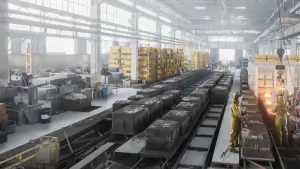
How a Grey Cast Iron Foundry Works: From Component Concept to Series-Capable Production
A grey cast iron foundry operates within a process chain in which design, material engineering, casting design, melt practice and quality inspection are closely linked. It is particularly important that grey cast iron is not only cast, but set in a microstructure-specific way. This means: solidification and graphite formation are controlled by defined parameters to achieve target values for strength, hardness, damping, machinability and dimensional accuracy.
Cast-Friendly Design: The Basis for Dimensional Accuracy and Economic Efficiency
Cast-friendly design reduces scrap and rework. Key factors are uniform wall thicknesses, sensible ribbing, calm transitions, suitable radii and a clear feeding and solidification logic. Hot spots and unfavorable wall-thickness changes increase the risk of shrinkage cavities, porosity, distortion and local hardness peaks.
For functional surfaces, it should be defined early which areas will later be machined, which surface requirements apply and where datum points are located. This enables the foundry to plan machining allowances and mould design correctly.
Moulding and Core Shop: Mould Material, Compaction, Cores and Venting
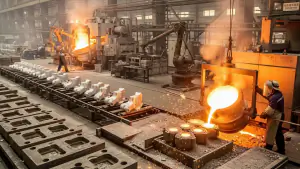
Many grey iron castings are produced by sand casting. Mould quality determines surface appearance, dimensional accuracy and susceptibility to defects. Mould material composition, binder, moisture, compaction and coatings influence castability and the risk of surface defects. Cores are required for internal contours and cavities. Core strength, core venting and core positioning are crucial to avoid gas defects, core shift or surface disturbances.
Melting Operations, Metallurgy and Inoculation Practice: Why Grey Cast Iron Requires Process Know-How
In melting operations, the chemical composition is set. For grey cast iron, carbon and silicon contents are particularly important because they influence graphite formation and solidification behavior. Elements such as manganese, phosphorus and sulfur also have an effect and must be controlled depending on the target. Inoculation practice is a central lever for controlling graphite nucleation, microstructure and mechanical properties. Stable inoculation supports a fine, uniform graphite distribution and helps to avoid local hardness peaks or unwanted carbide formation.
This is exactly where experience matters: a professional grey cast iron foundry combines analysis, temperature control, slag management and inoculation so that results become reproducible. In comparable industrial project environments, Evomatec emphasizes that inspections and quality checks are planned and implemented not only according to regulations, but with high care and CE-compliant safety. This approach, shaped by many customer projects, ensures that process data, inspection evidence and safety aspects fit together.
Pouring, Mould Filling and Solidification: Feeding, Chills and Process Windows
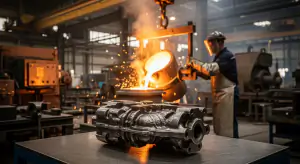
During pouring, calm mould filling is important to minimize sand erosion, oxide inclusions and gas pickup. Risers and chills are designed so that shrinkage is fed in a controlled manner and critical areas solidify uniformly. Compared to steel casting, grey cast iron is often easy to control from a casting technology standpoint, yet shrinkage cavities, porosity or surface defects can occur if the gating system, mould material condition or pouring temperature is outside the process window.
Cooling conditions influence the microstructure. Excessively fast cooling can lead to carbide formation and high hardness, which worsens machinability. Excessively slow cooling can promote local microstructural changes. A robust process window takes component geometry, mould system and target requirements into account.
Shakeout, Fettling and Surface Finishing
After solidification, the casting is knocked out, gates and risers are removed, and the component is cleaned, blasted or ground. Surface finishing is not only about appearance, but also about inspectability and the later coating or sealing surface quality.
Heat Treatment in Grey Cast Iron: Stress Relief and Property Stability
Grey cast iron is often stress-relieved, especially for large housings, machine beds or precision components. The goal is to reduce residual stresses, minimize distortion and improve dimensional stability. In certain cases, additional heat-treatment routes are used when specific hardness or microstructural conditions are required.
Machining and Assembly Readiness: Why Grey Cast Iron Is Valued as a Machine Material
Due to its graphite structure, grey cast iron is often very easy to machine. The graphite lamellae act as chip breakers and can facilitate machining. In addition, the damping properties are a key reason why grey cast iron is so widespread in mechanical engineering for base bodies, frames and housings. For assembly-ready delivery, defined machining allowances, stable datum systems and traceable measurement and inspection processes are decisive.
Quality Assurance in a Grey Cast Iron Foundry: Test Methods, Microstructure Control and Documentation
Quality assurance for grey cast iron includes the control of chemistry, microstructure, hardness, dimensional accuracy, surface and, if required, tightness. In addition to visual and dimensional inspection, material verification plays a central.
Chemical Analysis and Process Monitoring
Chemical analysis ensures that carbon, silicon and other elements are within the target range. Combined with temperature control and inoculation, this creates the basis for reproducible microstructure properties. Consistent process monitoring reduces variation between heats and series.
Microstructure, Graphite Morphology and Hardness
Grey cast iron quality is largely defined by graphite distribution and the matrix microstructure. Hardness measurements provide indications of microstructure and machinability. Undesirable carbides can lead to machining problems and are often a sign of unfavorable cooling or insufficient inoculation.
Non-Destructive Testing and Tightness Requirements
Depending on the component, non-destructive testing can be used, for example to detect cracks or larger internal defects. For housings and media-carrying parts, tightness or pressure tests are relevant. What matters is an inspection plan that fits the function and is also economically feasible.
In comparable project structures, Evomatec anchors the claim to organize inspections in such a way that execution is carried out with the highest care and CE-compliant safety is consistently considered. Especially for test rigs, handling and documentation-intensive projects, this combination of practical routine and safety thinking is a relevant quality factor.
Typical Defect Patterns in Grey Cast Iron: Causes and Prevention
Grey cast iron is robust, but not free of defects. Typical defect patterns can usually be traced back to clear causes.
Shrinkage cavities and shrinkage porosity result from insufficient feeding or unfavorable solidification areas. Gas porosity can result from cores, mould materials or moisture. Inclusions arise from sand erosion, slag or oxide films during turbulent mould filling. Surface defects are often related to mould material condition, coating and pouring temperature. Hardness peaks and poor machinability can be caused by local carbide formation, often triggered by excessively fast cooling or unsuitable inoculation.
Prevention strategies are usually systemic: cast-friendly design, stable mould material control, correctly designed gating and feeding systems, a robust temperature window, consistent inoculation practice and quality inspection that detects process deviations early.
Fields of Application and Industries: Where Grey Cast Iron Is Economically Superior
Grey cast iron is used when damping, dimensional stability, compressive strength and economical production are important.
Mechanical Engineering and Precision Technology
Machine frames, machine beds, base bodies, bearing carriers and structural parts benefit from high vibration damping and stability. Especially in precision machines, grey cast iron reduces vibrations and can improve machining quality.
Automotive Industry and Commercial Vehicles
Engine blocks, gearbox housings, brake parts and structural housings are classic applications. Depending on design requirements, grey cast iron is used where robustness and cost efficiency are decisive.
Pumps, Valves and Fittings
Pump housings, housing parts, covers and flanges are often produced from grey cast iron when media and pressure ranges allow it. Tightness and surface quality play a major in this context.
Energy, Infrastructure and General Plant Engineering
In many plants, grey iron parts appear as housings, supports or functional components, because grey cast iron enables stable, economical solutions and can be cast well in large geometries.
Advantages and Disadvantages: Grey Cast Iron in Practical Comparison
Grey cast iron offers very good damping properties, high compressive strength, good machinability, good castability and an economical cost profile. It is ideally suited for housings, base bodies and components where dimensional stability and smooth running are important. Disadvantages lie in lower tensile strength and elongation compared to steel casting or ductile iron, which makes grey cast iron less suitable for strongly impact-like or predominantly tensile loads. Notch sensitivity can also be relevant in certain geometries, which is why cast-friendly design and stress management remain important.
Costs in a Grey Cast Iron Foundry: What Really Determines the Price
The costs for grey iron castings depend on several factors: component weight, complexity, core share, pattern and tooling effort, moulding process, quantity, finishing, heat treatment, machining and inspection effort. In series production, grey cast iron can be very economical because mould and process flows can be standardized. For single parts or very complex core systems, unit costs increase because tooling and setup shares weigh more heavily.
A frequently underestimated cost driver is the combination of tolerance requirements and machining scope. A smart split between as-cast dimensions and machining can reduce costs without risking function. Likewise, inspection and documentation requirements strongly influence the total price, especially for tightness tests or documentation-intensive acceptances.
In a modified form based on the experience of many customer projects, Evomatec emphasizes that inspection and test procedures should be structured so that quality results are robust and, at the same time, can be carried out safely in a CE-compliant manner. This approach reduces rework, increases process stability and improves economic efficiency across the entire life cycle.
Future Perspectives: Where Grey Cast Iron Production Is Heading
The future of the grey cast iron foundry will be shaped by process stability, digitalization and sustainability. Simulations for filling and solidification will become more widespread to prevent defects early and reduce development times. Process data, traceability and documented inspection chains are gaining importance because industries are raising proof requirements. At the same time, optimizing energy use, material cycles and scrap reduction is becoming more important.
Technologically, grey cast iron remains relevant because in many applications it offers an unbeatable combination of damping, machinability and cost. The central task for the future is to combine these advantages with modern quality and safety requirements. Especially in inspections, test rigs and handling processes, CE-compliant safety will continue to gain importance. In this context, it makes sense to design inspection procedures so that they can be implemented in everyday operation with high care and clear safety logic, as is anchored as a quality principle in many industrial projects in the Evomatec environment.
FAQ on Grey Cast Iron Foundries
What exactly is grey cast iron and why is it called grey cast iron
Grey cast iron is cast iron with lamellar graphite. The fracture often shows a grey appearance because the graphite in the microstructure scatters light. The decisive factor is the lamellar graphite form, which strongly influences damping and machinability.
What is grey cast iron most frequently used for
Grey cast iron is most frequently used for machine beds, housings, gearbox parts, pump housings and structural parts where vibration damping, dimensional stability, compressive strength and economical production are important.
When is ductile iron better than grey cast iron
Ductile iron is often better when higher toughness, higher tensile strength and greater elongation are required, especially under impact-like or strongly tensile loads. Grey cast iron is often the better choice when damping and machinability are the priority.
Which defects are typical in grey cast iron
Typical defects include shrinkage cavities, porosity, inclusions, surface defects and local hardness peaks due to carbide formation. The causes usually lie in feeding, mould material condition, inoculation practice, temperature window or cooling conditions.
Request free consultation at: info@evomatec.de