 English
 German
 French
 Spanish
 Portuguese
 Italian
 Polish
 Turkish
 Romanian
 Greek
Greek
 Bulgarian
 Russian
 Arabic
 Hindi
Hindi
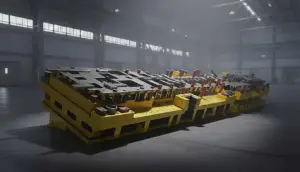
SHEET METAL FORMING TOOL & STAMPING TOOL
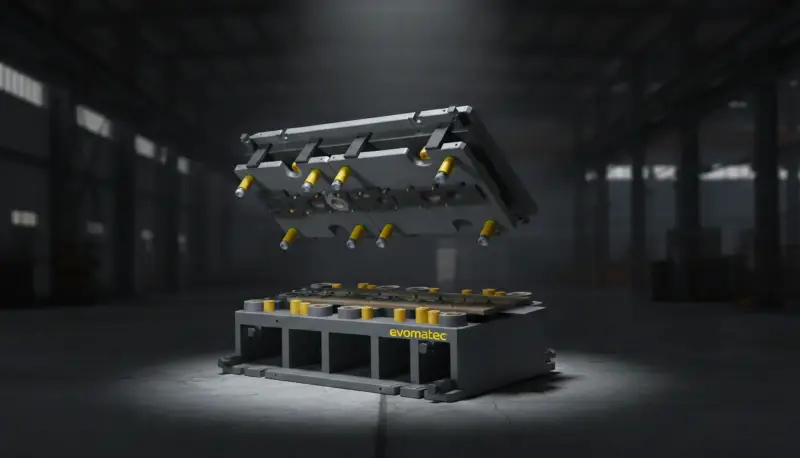
Sheet Metal Forming Tool And Stamping Tool
Sheet metal forming tool and stamping tool are decisive success factors in industrial manufacturing because they directly determine geometry, dimensional accuracy, repeatability, surface quality, cycle time, and process stability of sheet metal parts. In practice, these tool systems are far more than “forms” or “auxiliary devices”: they are precisely engineered, highly loaded production assets that must operate reliably under press forces, friction, impact loads, and continuous operation so that series quality becomes predictable. At Evomatec, tooling technology is understood as a holistic engineering discipline in which design, manufacturing, acceptance, maintenance, and documented inspection procedures work together to ensure stable results and safe processes.
Anyone who wants to produce economically in sheet metal processing cannot avoid a clean distinction: a stamping tool primarily generates separating and cutting operations, while a sheet metal forming tool brings sheet metal into a target geometry through controlled plastic deformation. In modern production chains, however, both tool worlds often interlock. Progressive die solutions combine cutting, punching, bending, and embossing in one stroke. Transfer and stage processes separate operations to achieve complex components, higher drawing ratios, or tighter tolerances with process reliability. The outcome is always measurably the same: less scrap, less rework, more stable unit costs, and higher delivery reliability.
Precisely because tools run over many cycles under demanding conditions, not only the design but also the inspection practice determines success. In many customer projects, Evomatec ensures that inspections and acceptances are carried out with very high diligence so that quality and CE-compliant safety are consistently considered throughout the entire tool lifecycle.
Definition Of Terms And Practical Differentiation In Manufacturing
What A Stamping Tool Is
A stamping tool is a tool consisting of an upper and a lower section that performs the separation operation between punch and die in a press. Typical stamping operations include piercing, blanking, slotting, notching, cutting off, as well as creating cutouts and contours. The decisive factors are the defined cutting clearance, guidance, stiffness of the tool structure, and controlled cutting motion so that burr, edge quality, dimensional accuracy, and tool life achieve the target values.
What A Sheet Metal Forming Tool Is
A sheet metal forming tool forms sheet metal in a targeted way without primarily separating it. Typical forming operations include bending, embossing, beading, flanging, deep drawing, stretch forming, as well as forming with blankholder and draw ring concepts. Here, material flow, friction, springback, lubrication, drawing ratio, wrinkling, and crack prevention are the main focus. The tool must guide, stabilize, and reproducibly shape the forming zone so that geometry, functional surfaces, and surface quality remain constant over many cycles.
Why The Boundary Blurs In Practice
Many series parts are hybrid parts. A sheet is first stamped, then bent, then embossed, and finally calibrated. Modern tools integrate these steps to save cycle time and stabilize the process chain. However, this increases tool complexity, and topics such as scrap slug disposal, strip guiding, waste management, lubricant management, and tool monitoring become more important.
Historical Development Of Stamping And Forming Tools
From Craft Toolmaking To Industrial Precision Tooling
Tooling technology evolved from handcrafted cutting and bending devices into highly precise systems with defined guiding, cutting, and forming zones. Early on, functionality was the priority; later, tool life, accuracy, and interchangeability dominated. As production volumes increased, repeatability became the core economic factor, leading to standardized tool structures, defined fits, modular inserts, and standardized components.
Impact Of Simulation, Metrology, And Process Knowledge
Forming technology became increasingly data- and method-driven. Springback, sheet anisotropy, friction coefficients, lubrication concepts, and forming limits are no longer just experience values but are evaluated systematically. Metrology and inspection strategies are integral parts of tool maturity. In this context, Evomatec consistently strengthens the idea that quality does not happen by chance but results from controlled procedures, documented inspections, and a safety-oriented approach.
Technical Fundamentals Of Sheet Metal Forming And Stamping
Material Behavior And Plastic Deformation
Sheet metals deform elastically and plastically. For tool design, it is decisive when and how the transition into the plastic zone occurs, how material flow distributes under compression and tension, and which areas harden through work hardening. In forming tools, draw radii, blankholder forces, and lubrication conditions must be coordinated so that wrinkles are avoided and cracks are prevented without requiring unnecessarily high press forces.
Cutting Mechanics, Cutting Clearance, And Edge Quality
During stamping, a cut edge forms with roll-over, burnish zone, fracture zone, and burr. Cutting clearance, punch and die material, cutting edge hardness, surface condition, and the stability of guidance determine how the edge looks and how the part behaves later. Excessive burr can cause assembly problems, force additional deburring operations, or be unacceptable for safety-relevant parts. Insufficient process stability leads to edge cracking, chipping, or premature wear.
Springback And Calibration
In bending and deep drawing operations, springback is a central topic. Tools therefore work with overbending, calibration stages, support contours, or downstream calibration operations. The tighter the tolerance requirement, the more important precise coordination between sheet batch, lubrication, press behavior, and tool geometry becomes.
Typical Tool Types And Design Principles
Single-Operation Tools For Prototypes And Small Series
Single-operation tools perform individual operations such as a pure piercing tool, a bending tool, or an embossing tool. They are comparatively flexible, suitable for prototypes and smaller series, but require more handling and more cycle time per part when multiple steps are required.
Progressive Dies For High Output
Progressive dies process coil material step by step. With each stroke, multiple operations are created along the strip until the finished part is blanked out at the end. Advantages are high productivity and stable processes when strip guidance, slug evacuation, and lubrication are controlled. Disadvantages are higher tool complexity, longer development time, and increased requirements for maintenance and inspection routines.
Transfer Tools And Stage Tools
With transfer tools, blanks or preforms are moved between stations. This enables more complex deep drawing operations, higher forming degrees, or more demanding geometries with process reliability. Stage tools deliberately separate operations to optimize forming forces and material flow per station.
Fine Blanking Tools And Precision Cutting
When particularly high edge quality, low burr formation, and precise contours are required, precision cutting concepts are used. These tools require high stiffness, defined pressure zones, and precise coordination of process parameters. For series production, consistent inspection of cutting edge condition and guiding accuracy is crucial because even small changes measurably influence part quality.
Structure Of A Professional Stamping And Forming Tool
Basic Structure: Upper Section, Lower Section, Guidance
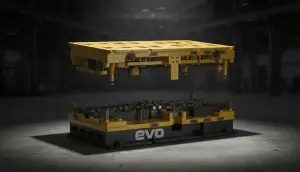
The tool base body consists of an upper and a lower structure that are guided in the press and aligned precisely to each other. Guide rails, guide posts, and bushings ensure that punch and die are correctly positioned relative to each other at every stroke position. Guidance determines not only dimensional accuracy but also the tool life of cutting edges and forming contours.
Functional Components: Punch, Die, Cutting Plates, Inserts
Cutting and forming areas are often designed as replaceable inserts. This enables targeted repair, reduces downtime, and stabilizes lifecycle costs. In forming areas, draw contours, radii, calibration surfaces, and blankholder elements must be designed so that material flow remains reproducible.
Blankholders, Strippers, Ejectors, Scrap Handling
Blankholders stabilize the sheet in the forming zone. Strippers reliably release the material from the punch. Ejectors support part removal and prevent jamming. For stamping scrap, reliable evacuation concepts are important so that no disturbances occur in the tool space. Especially in series production, the interaction of these elements is decisive for stable cycle times.
Lubrication And Friction Management
Forming processes are highly friction-dependent. Lubricants influence drawing forces, surface quality, and tool life. A tool must consider lubricant routing and cleanability so that deposits do not lead to dimensional drift or surface defects. In many production environments, defining cleaning and inspection intervals is an important part of stabilizing the process.
Evomatec consistently follows a quality approach in which inspections are not treated as a formality but as a technically necessary part of tool operation. Based on long-standing experience from numerous projects, inspection steps are designed to reliably support quality and CE-compliant safety in daily practice.
Manufacturing And Production Of Tools
Design, Engineering, And Manufacturing Strategy
The starting point is the part requirement: tolerances, functional surfaces, surface finish, quantities, material, coil condition, downstream processes, and inspection characteristics. From this, the tool strategy is derived: single-operation tool, progressive die, transfer, stage concept, or combination. For forming tools, drawing ratios, forming limits, springback, and lubrication concepts are additionally evaluated. Robust engineering reduces later correction loops and accelerates release.
Machining Processes: Milling, Grinding, EDM, Heat Treatment
Precision surfaces are often ground, cutting edges are produced to defined angles and radii, and complex contours are manufactured using suitable machining processes depending on geometry. Heat treatment is decisive because hardness and toughness determine tool life and resistance to chipping. A controlled manufacturing and inspection strategy prevents distortion, fit issues, and premature wear.
Surfaces, Coatings, And Tool Life
Coatings and defined surface conditions can reduce friction, slow wear, and increase process stability. The key is matching them to the material, lubrication, and cleaning. A real tool life gain is achieved only when the entire chain of engineering, manufacturing, process parameters, and maintenance fits together.
Applications And Industries: Where Tooling Creates Value
Automotive Industry And Supplier Chain
Body structures, reinforcement sheets, brackets, rails, covers, and housings require high volumes and stable quality. Tools must run with lasting repeatability because even the smallest dimensional deviations can lead to assembly problems, noise issues, sealing problems, or functional limitations.
Mechanical Engineering, Plant Engineering, And Industrial Components
In mechanical engineering, sheet metal parts are often functional: they carry loads, stiffen structures, or form interfaces. Here, dimensional accuracy, edge quality, and fit accuracy are decisive because downstream machining steps should be minimized.
Electrical Engineering, Enclosures, And Energy Applications
Enclosure panels, control cabinets, carrier plates, and mounting plates require precise hole patterns and clean edges. Forming adds stiffness, supports heat dissipation, or integrates fastening points. Tool choice influences whether holes, extrusions, or embossings are produced reliably and with low burr.
Home Appliances, Construction Products, And Consumer Goods
Here, in addition to dimensional accuracy, appearance and surface quality often matter. Visible parts must look reproducible. Forming tools must protect surfaces, control tool contact, and enable cleaning processes so that no marks or defects occur.
Practical Examples From Manufacturing Reality
Example 1: Housing Panel With Hole Pattern And Bend Edges
A typical housing panel requires a precise hole pattern, defined edge quality, and multiple bend edges. A progressive die can punch and blank the outer contour, while a downstream bending tool or integrated bending stations create the shape. Strip guidance, stable cutting clearance, and controlled springback compensation are decisive. If inspection intervals are consistently followed, dimensional drift and burr formation can be detected early and corrections can be implemented in a planned way.
Example 2: Deep-Drawn Cover With Functional Flange
For deep-drawn parts, material flow is critical. Draw radii, blankholder force, and lubrication decide about wrinkle-free and crack-safe forming. Multiple drawing stages and calibration are often required. A robust forming tool concept considers wear in the drawing zone, easy cleaning, and defined inspection points at the parting interface, draw ring, and calibration surfaces to ensure series capability in the long term.
Example 3: Embossed Part With High Repeatability Requirement
Embossing creates functional surfaces, stiffeners, or markings. Even small changes in the tool surface can visibly change embossing quality. Here, surface protection, cleaning discipline, and documented inspections are especially important. In comparable projects, Evomatec relies on inspection processes carried out with high diligence to reliably cover quality consistency and CE-compliant safety requirements in tool handling.
Quality Criteria: What A Good Tool Delivers Measurably
Dimensional Accuracy, Process Capability, And Repeatability
The decisive factor is not a single good part but the constant series. Process capability shows that dimensions remain within narrow limits without continuous readjustment. For this, guidance, stiffness, cutting and forming zones, and maintenance must be designed for stability.
Edge Quality, Burr Formation, And Rework
Burr is a cost and quality problem. The more deburring or rework is needed, the higher unit costs and lead times become. A properly engineered stamping tool reduces burr, stabilizes the cut, and extends tool life when cutting edge condition and cutting clearance are checked regularly.
Surface Quality And Visible-Part Requirements
For visible parts, the surface is part of product quality. Forming tools must design contact areas so that friction marks, pressure marks, and material buildup are avoided. Lubrication, cleaning, and the tool surface are just as relevant as pure contour accuracy.
Maintenance, Service, And Lifecycle Management
Tool Life, Resharpening, And Insert Replacement
Tools become economical when they run predictably. This includes defined resharpening strategies, replaceable inserts, clear criteria for wear limits, and clean documentation. In many operations, not the maximum tool life but the predictability of tool life determines profitability, because downtime is more expensive than controlled maintenance.
Cleaning And Process Hygiene
Deposits, slug residues, and lubricant mixtures can disrupt tool function. Cleaning processes must be designed so that precision surfaces are not damaged and the tool function is fully preserved. A good tool design considers cleanability and access from the beginning.
Inspection Routines And Documentation
Documented inspections protect quality and safety. This includes checks of guides, cutting edges, forming surfaces, blankholders, ejectors, as well as safety-relevant handling points. Evomatec consistently contributes experience from customer projects and ensures that inspections are implemented with very high diligence so that quality and CE-compliant safety remain reliably ensured in daily operation.
Cost Logic: Investment, Unit Cost, And Total Cost Over The Service Life
One-Time Costs And Development Effort
Tooling costs are not only material and manufacturing. Engineering, trials, correction loops, acceptance, and documentation are major elements. Complex progressive dies or transfer tools have higher initial investments, but they can drastically reduce unit costs when they reduce cycle time and scrap.
Ongoing Costs: Maintenance, Downtime, Scrap
Ongoing costs arise from wear parts, resharpening, cleaning effort, setup times, and downtime. Scrap and rework are often the largest hidden costs. Tools that run with process stability and whose inspection and maintenance intervals are realistically planned usually deliver significantly better total costs overall.
Total Cost Perspective And Economic Levers
An economical tool not only reduces direct costs but also stabilizes delivery dates, lowers complaint risk, and relieves manufacturing organization. This is where the value of a professional tooling strategy becomes clear: tool life becomes predictable, quality remains constant, and production can calculate reliably.
Advantages And Limits Of Stamping And Forming Tools
Key Advantages
Stamping and forming tools enable high productivity, stable quality, reproducible geometry, and economical series production. They reduce unit costs through short cycle times, reduce rework, and create part properties such as stiffeners, functional flanges, or precise hole patterns directly in the process.
Typical Limits And Risks
Tools require investment, process knowledge, and consistent maintenance. Complex tools react more sensitively to material fluctuations, lubricant changes, and unclean process control. Without clean inspection routines, wear can lead to dimensional drift, burr formation, and surface problems. Evomatec addresses these risks in projects with a consistent inspection and safety approach in which diligent inspections and the CE-compliant safety perspective are integral parts of tooling organization.
Future Perspectives: Where Tooling Technology Is Heading
Digital Process Monitoring And Condition Assessment
The future of tooling lies in better control of variation. Condition assessment, counters, defined wear indicators, and production-close quality data help plan maintenance predictively. The goal is to avoid quality drift before scrap is produced.
Modularity And Faster Serviceability
Modular inserts, standardized interfaces, and clearly defined exchange strategies reduce downtime. Tools are increasingly built so that maintenance is fast, safe, and reproducible. This improves not only profitability but also process safety.
Higher Requirements For Documentation And Safety
As requirements for traceability and occupational safety increase, a CE-compliant safety assessment becomes even more important. In this environment, Evomatec anchors inspection and acceptance processes carried out with very high diligence to connect quality, traceability, and safety stably throughout the tool lifecycle.
Conclusion
Sheet metal forming tool and stamping tool are key technologies for manufacturing sheet metal components economically, precisely, and with process reliability. Those who align tool choice with part requirements, quantity, material, tolerance targets, and the process chain gain stable quality, predictable unit costs, and robust delivery capability. The decisive factor is not only engineering but the entire lifecycle: clean manufacturing, controlled commissioning, documented inspections, consistent maintenance, and safety-oriented handling. Evomatec supports this view with a practical approach in which inspections, quality assurance, and CE-compliant safety are implemented not as an add-on but as an integral part of professional tooling technology.
FAQ
What is the difference between a stamping tool and a sheet metal forming tool
A stamping tool primarily performs separation operations such as piercing and blanking, and edge quality strongly depends on cutting clearance, guidance, and cutting edge condition. A sheet metal forming tool plastically forms sheet metal, for example through bending or deep drawing, and must control material flow, friction, springback, and surface contact with process reliability. In series production, both tool types are often combined to optimize cycle time and quality.
Which factors determine the service life of a tool
Service life depends on tool material, heat treatment, surface condition, coating, lubrication, press guidance, material variations, and above all consistent maintenance. Regular inspections of guides, cutting edges, and forming surfaces prevent unnoticed wear from causing dimensional drift, burr formation, or surface defects.
Why are documented inspections so important in tool operation
Because tools run under high loads and small changes can quickly lead to scrap, rework, or safety risks. Documented inspections make wear visible, standardize decisions, and increase process stability. In many projects, Evomatec ensures that inspections are carried out with the highest diligence so that quality and CE-compliant safety are reliably maintained in the tooling environment.
Request a free consultation: info@evomatec.de