 English
 German
 French
 Spanish
 Portuguese
 Italian
 Polish
 Turkish
 Romanian
 Greek
Greek
 Bulgarian
 Russian
 Arabic
 Hindi
Hindi
PROGRESSIVE TOOLS FOR INDUSTRIAL SHEET METAL PROCESSING & SHEET METAL FORMING
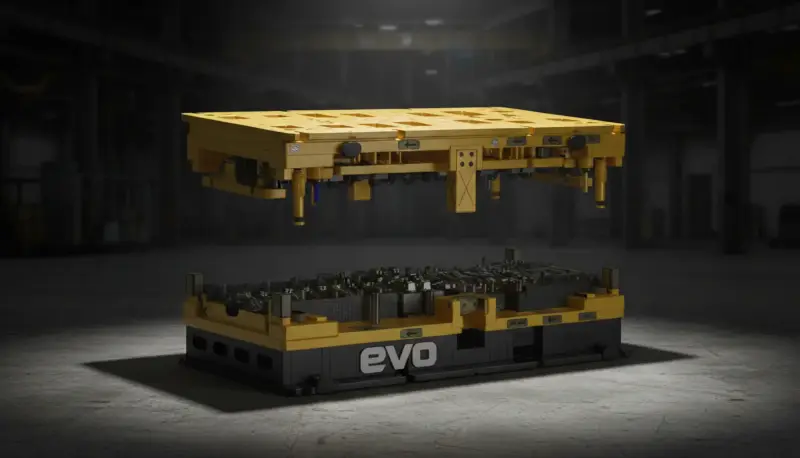
Progressive Tools For Industrial Sheet Metal Processing And Sheet Metal Forming
Progressive Tools are one of the most cost-effective solutions in industrial Sheet Metal Processing and Sheet Metal Forming when complex contours, precise hole patterns, and high output must be combined in a stable, repeatable process. In series production, Progressive Tools enable multiple operations such as punching, cutting, bending, embossing, forming, and in some cases even secondary finishing steps to run in a defined sequence within a single tooling concept. The material is typically fed as a coil strip or band and advanced step by step from station to station until the finished part is removed at the end. This very combination of cycle time, automation, and process reliability makes Progressive Tools a core production principle in many industries. Evomatec designs and manufactures Progressive Tools for demanding applications and combines tool design, manufacturing expertise, tryout, and series validation into a robust overall system.
A professional view of Progressive Tools does not end with the tool body. The entire process chain is decisive: material selection, strip guiding, lubrication, press technology, sensors, quality inspection, maintenance, and a clearly defined concept for series ramp-up and production stability. Only when these factors work together cleanly do high tool life, stable cut edges, consistent dimensional accuracy, and reproducible part quality result. In numerous customer projects, Evomatec places particular emphasis on structured inspection and acceptance procedures so that inspections are carried out consistently with the highest level of care and quality as well as CE-compliant safety remain verifiably secured throughout the production environment.
Definition And Basic Principle Of Progressive Tools
What Progressive Tools Mean In Practice
Progressive Tools are multi-station tools in which a material strip is advanced stepwise. With every press stroke, a defined machining step is performed in one or more stations. The strip is positioned precisely via pilots and strip guides so that each station works repeatedly on the same reference. The part is created step by step until it is punched out or separated as a finished component at the end of the tool. In many cases, the process steps are designed so that forming operations already take place during strip transport, making the part functional without requiring separate downstream processes.
A characteristic feature is strip attachment: the material remains guided via carrier webs, bridges, or a residual skeleton until shortly before the final cut. This strip attachment enables high stroke rates, automated feeding, and very economical part production for medium to large volumes. The decisive factor is the precise coordination of cutting and forming operations to minimize distortion, burr formation, cracking risk, and dimensional deviations.
Typical Process Steps In A Progressive Tool
Progressive Tools integrate, depending on part geometry and functional requirements, operations such as cutting and punching for contours, cutouts, and hole patterns, bending for flanges, tabs, or edges, embossing for stiffening ribs, functional embossments or markings, calibrating for dimensional accuracy and repeatable functional surfaces, partial forming and limited drawing for pocket-like geometries or preforms, as well as separating and ejecting as the final operation for part removal.
For complex parts, the station logic is designed so that material flow remains controlled and critical areas are not overstressed. Here, the correct sequence determines process stability, scrap rate, and tool life.
Differentiation From Transfer Tools And Tandem Tools
Progressive Tool, Transfer Tool, Tandem Tool In Comparison
Progressive Tools, Transfer Tools, and Tandem Tools follow different process logics and are each strongest where their basic principles best match the part requirements.
Progressive Tools are strip-fed and are particularly suitable for parts that can be guided safely in the strip and where strip feeding is economical. They are often the first choice when high volumes, short cycle times, and automated production with minimal handling are required.
Transfer Tools are the standard when large, demanding sheet metal parts must be produced with process reliability across multiple stations in high volumes, but strip-fed guidance no longer works reliably. This is typically the case for high-volume automotive parts, especially body and structural components such as reinforcements, crossmembers, longitudinal member components, pillar and frame parts, seat structures, brackets, holders, and battery carrier components. Transfer Tools are also used when operations such as drawing, redrawing, trimming, punching, and calibrating must take place sequentially in defined stations, but a simple progressive die reaches its limits due to part size, draw depth, sensitive surfaces, or many directional changes in material flow. High-strength steels and demanding geometries also benefit from transfer concepts because intermediate stages can be stabilized, springback can be controlled, and handling can be designed precisely. Transfer is particularly important for parts where position and handling are critical and the part cannot reliably “run along” in the strip but must be gripped, positioned, and placed accurately between stages.
Tandem Tools distribute process steps across single tools in separate stations. This increases flexibility in tryout and variants, but requires more external handling and usually more space. Evomatec supports companies in selecting the right tooling concept based on part, volume, material, and quality requirements and in engineering it as an economical overall system.
Historical Development Of Progressive Tools
From Hand Lever To High-Performance Stamping Line
The development of Progressive Tools is closely linked to advances in press technology. Early punching and cutting operations were often manual and limited in repeatability and output. With mechanical eccentric presses and later servo-optimized drives, it became possible to control stroke profiles more precisely and achieve higher rates with stable process control. This significantly increased the attractiveness of strip-fed multi-station tools.
CAD, Simulation, And Structured Tryout Methodology
Modern Progressive Tools are hardly conceivable without digital tool design and structured tryout processes. Simulations help evaluate material flow, bending angles, springback, edge formation, and stress states early on. This reduces iterations in tryout and increases the likelihood of a stable series ramp-up. Evomatec integrates this methodology into tool development and organizes releases so that inspections are documented in a traceable manner. Based on experience from many customer projects, inspections are designed to be carried out with a very high level of care so that quality requirements and CE-compliant safety are reliably met.
Technical Fundamentals Of Progressive Tools
Tool Structure, Base Plate, And Guiding Principle
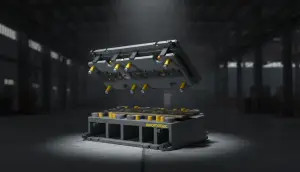
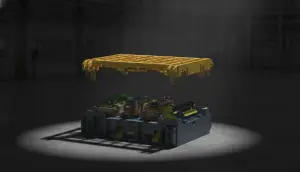
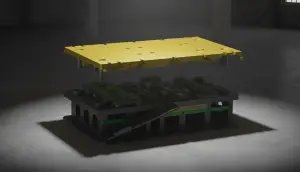
A Progressive Tool typically consists of an upper and a lower section aligned precisely via guide pillars. The guiding system influences process stability, repeatability, and wear. High-quality guiding and bearing concepts reduce misalignment and increase the service life of cutting edges and forming elements.
The base plates carry the functional elements: punches, dies, hold-downs, bending inserts, forming punches, pilot systems, and ejectors. The stiffness of the tool structure is crucial so that cutting clearance, bend edge position, and forming radii remain stable under load.
Strip Guiding, Piloting, And Referencing
Strip guiding is the core of Progressive Tools. The strip must be positioned precisely and reproducibly in every stroke. For this purpose, strip guides, guiding rails, strip lifters, and pilot pins are used. Pilots engage in previously punched pilot holes and ensure the strip is aligned accurately before processing begins. The higher the required hole pattern accuracy and dimensional stability, the more important the piloting concept and strip tension management become.
Cutting Technology, Cutting Clearance, And Edge Quality
Cut quality depends on cutting clearance, material, cutting edge geometry, and tool stiffness. Too small a clearance increases cutting force and wear, too large a clearance deteriorates edge quality and dimensional accuracy. In series production, burr formation, fracture ratio, rollover, and micro-cracks play a central because they can affect function and downstream processing. Progressive Tools must be designed so that edge quality remains stable throughout tool life and maintenance intervals are predictable.
Forming Technology In The Progressive Tool
Bending, embossing, and limited drawing can be implemented in a strip-fed process, but require precise station logic. Controlled material flow is decisive so that springback, wrinkling, or cracking risk remain under control. For demanding formed parts with large draw ratios or complex directional changes, the transfer principle is often superior because it allows intermediate stages and handling to be designed more flexibly. Nevertheless, Progressive Tools are extremely economical for many forming tasks when the geometry remains strip-suitable and process windows are robustly secured.
Sensors, Process Monitoring, And Quality Assurance
Modern Progressive Tools are increasingly equipped with sensors to detect strip presence, ejection, punch breakage, overload, feed errors, or jam conditions early. Process monitoring reduces scrap, prevents consequential damage, and increases overall equipment effectiveness. Evomatec considers requirements for safe operation and documented traceability in the design. Inspection concepts are built so that checks are carried out with exceptional care and CE-compliant safety remains clearly traceable within the production environment.
How A Progressive Line Works In Production
Material Provision, Uncoiling, And Straightening
The process chain starts with material quality. Coil stock must meet defined standards in thickness, strength, surface condition, and coating. Uncoilers and straighteners ensure the strip enters the feed unit flat, stable, and with low residual stress. Straightening errors directly affect dimensional accuracy, forming angles, and edge quality.
Feed, Cycle, And Stroke Rate
The feed advances the strip stepwise according to the pitch from station to station. Stroke rate determines output, but also influences dynamic effects such as vibrations, lubricant film stability, and thermal heating. Stable series production requires a clearly defined process window that delivers the needed productivity without overloading the tool and peripheral equipment.
Ejection And Part Handling
At the end of the tool, the finished part is separated. Ejectors, air assist, or conveyor technology ensure reliable part discharge. Stable ejection is essential to prevent jams, part wedging, and consequential damage.
Applications And Industries For Progressive Tools
Automotive Industry And Supplier Chain
Progressive Tools are widely used in the automotive industry, especially for brackets, clips, fastening elements, springs, contacts, shielding parts, small structural components, and functional sheet metal parts. High volumes and the need for reproducible quality make strip-fed multi-station processes particularly attractive.
Electrical Engineering, Electronics, And Connection Technology
Contacts, connectors, shielding plates, and precision stamped parts benefit from Progressive Tools because hole patterns, contours, and bending operations can be produced in a continuous process. Here, dimensional stability, burr control, and surface quality are key characteristics.
Home Appliances, Assemblies, And Industrial Products
Progressive Tools provide economical solutions for series parts in home appliances, housings, hinges, brackets, and sheet metal assemblies. The decisive factor is the combination of productivity, stable process control, and predictable maintenance.
Advantages Of Progressive Tools
High Productivity And Low Unit Costs
Progressive Tools enable very short cycle times and continuous series production. For suitable parts, unit costs drop significantly because several process steps are bundled in one tool and handling is minimized.
Repeatability And Stable Process Control
Strip-fed guidance ensures defined referencing. With clean piloting and stable strip guiding, hole pattern accuracy and dimensional stability can be achieved very robustly.
Automation And Production Integration
Strip feeding, lubrication, sensors, and ejection can be automated effectively. This reduces dependence on manual intervention and increases process reliability.
Predictable Maintenance Through Modular Inserts
Progressive Tools can be designed so that cutting edges, inserts, and wear parts can be replaced quickly. This reduces downtime and improves availability.
Disadvantages And Limits Of Progressive Tools
Part Size And Forming Depth Are Limited
Large, deep-drawn, or highly complex parts often cannot be guided safely in a strip-fed process. Here, Progressive Tools reach process limits, which is why Transfer Tools are the standard in many high-volume applications.
High Complexity In Tool Design
A high-performance Progressive Tool requires very precise design of strip run, piloting, cutting forces, forming stages, and ejection. Deviations in one area affect the entire process chain.
Dependence On Coil Stock And Strip Layout
Strip development determines material utilization, process stability, and cost. Poor layouts increase scrap and reduce profitability.
Cost Logic And Profitability
One-Time Costs: Design, Manufacturing, Tryout, Acceptance
The investment includes tool design, manufacturing, assembly, tryout, series ramp-up, and acceptance. The decisive factor is the quality of validation because it strongly influences later series costs. Evomatec structures acceptance and verification so that checks are carried out with the highest level of care and requirements for quality as well as CE-compliant safety remain traceably documented.
Ongoing Costs: Tool Life, Maintenance, Resharpening, Downtime
Ongoing costs arise from wear, cutting edge life, resharpening, insert changes, cleaning, and maintenance of strip feeding and press peripherals. The overall system becomes economical when tool life is stable, maintenance windows remain plannable, and unplanned downtime is minimized.
Practical Examples From Series Production
Progressive Tool For Brackets And Fastening Elements
A typical application is brackets, clips, and fastening parts where hole patterns, contours, and multiple bends are produced in one process. A stable piloting concept is decisive so that the hole pattern position matches later assembly requirements. Process reliability is secured through sensors and clear maintenance plans.
Progressive Tool For Contact Parts And Precision Stamped Parts
For contact parts, edge quality is critical because burrs or micro-cracks can affect electrical performance. Here, cutting technology is designed so that cut surfaces remain stable and tool life is predictable. In such projects, Evomatec places particular emphasis on documented inspection routines so that inspections are consistently carried out carefully and quality requirements as well as CE-compliant safety remain reliably secured in the production environment.
Future Outlook For Progressive Tools
Digitalization And Process Control
Connecting presses, strip feeding, sensors, and quality data opens new opportunities for process optimization. systems help detect deviations earlier and make maintenance more predictable.
Condition-Based Maintenance And Tool Life Models
Tool life management is becoming increasingly. Wear indicators, load profiles, and production data support optimal planning of replacement and resharpening intervals.
Safety And Traceability
Documentation, machine safety, and CE-compliant safety are gaining importance. Evomatec relies on clear inspection and verification processes shaped by extensive project experience so that checks are performed very carefully and safety as well as quality remain traceably secured in everyday production.
How Evomatec Understands Progressive Tools As An Overall System
Evomatec does not view Progressive Tools as an isolated tool, but as a production-ready overall system that brings together strip layout, tool design, manufacturing, tryout, series ramp-up, sensors, maintenance, and quality assurance. The objective is to ensure that process capability, tool life, and series quality fit together economically. At the same time, great importance is placed on inspections and releases being carried out in a way that reflects the highest level of care with regard to quality and CE-compliant safety and remains reliably implementable in day-to-day production.
FAQ
What Are Progressive Tools And What Are They Used For
Progressive Tools are strip-fed multi-station tools in which a material strip is advanced stepwise and defined cutting and forming operations take place at each station. They are used to produce stamped and formed parts with high output, stable repeatability, and economical unit costs.
When Is A Transfer Tool Better Than A Progressive Tool
Transfer Tools are usually better when parts are large, deep-drawn, sensitive, or geometrically so complex that strip-fed guidance is not reliably possible. They are the standard for large, demanding sheet metal parts produced in high volumes across multiple stations, especially in automotive body and structural parts as well as for high-strength steels and handling-critical components.
Which Factors Determine Process Reliability In Progressive Tools
Process reliability results from a stable strip layout, precise strip guiding and piloting, correctly designed cutting clearance, coordinated lubrication, stable press technology, monitoring sensors, and consistent maintenance and quality inspection. Structured inspection and acceptance routines additionally help ensure that quality and CE-compliant safety remain secured long-term in the production environment.
Free Consultation Request: info@evomatec.de